The importance of skills
Employers are increasingly focused on skills rather than relying solely on credentials like majors or GPAs. Many use skills-based hiring practices in job descriptions, resume reviews, and interviews. To stand out, be ready to share examples of how you have applied your skills to solve problems and achieve results.
What skills do I need?
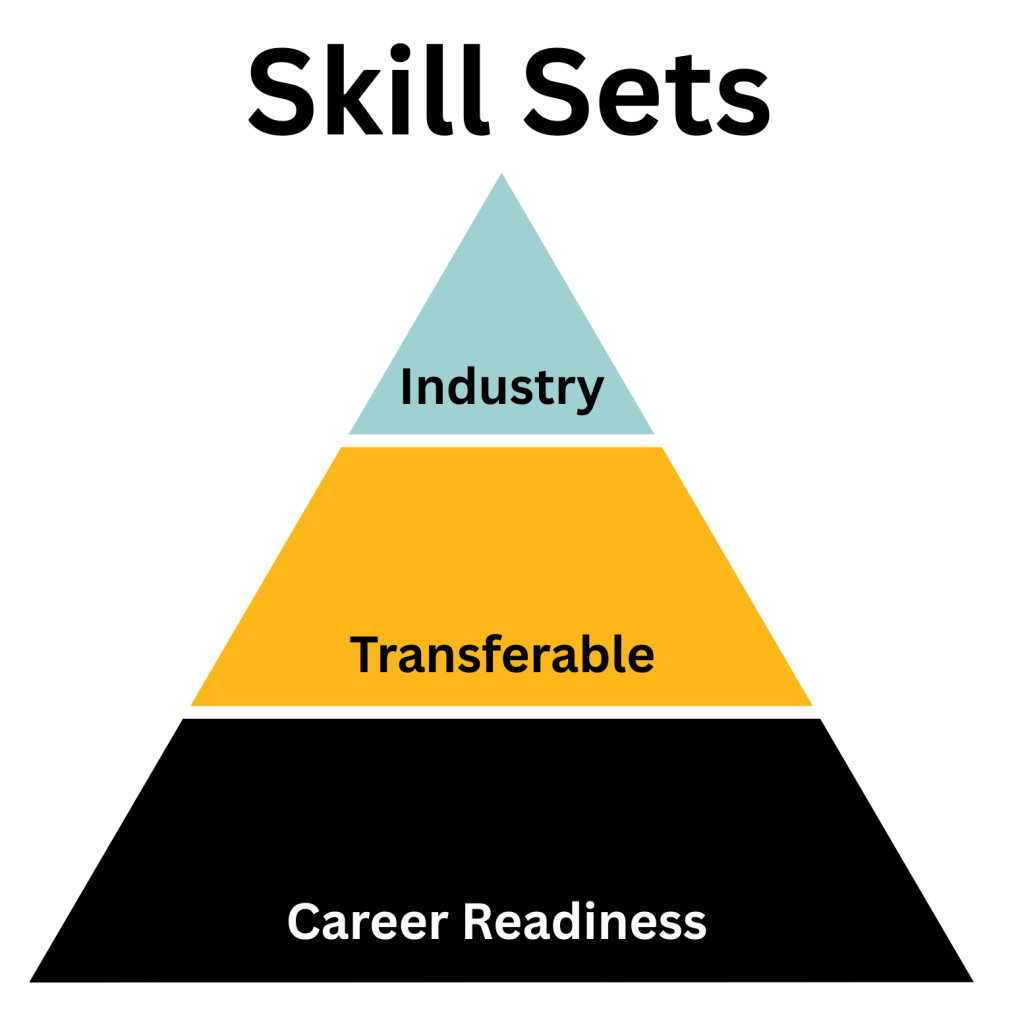
There are three types of skill sets that employers are looking for: broad career readiness skills, transferable skills, and industry-specific skills.
The good news is that the Missouri Method’s hands-on, learning-by-doing approach helps prepare you. Through coursework and co-curricular experiences, you are developing valuable skills that employers seek. The Career Center can help you identify and communicate those skills so employers see how you can contribute from day one.
Career Readiness
Career readiness is a foundation of core skills that prepare college students for success in the workplace. In other words, it is your ability to show employers you can do the job, work with others, keep growing, and contribute to something bigger than yourself. These broad areas of competency were developed by the National Association of Colleges and Employers (NACE) and applies to all majors.
Transferable Skills
Transferable skills are versatile abilities, traits, and knowledge that you can carry from one experience or environment to another. These specific skills map to the broad areas of career readiness. It is important to provide examples of these “portable skills” in your resume, articulate them in interviews, and highlight them on your LinkedIn profile.
| Career Ready Skill | Related Transferable Skills (Examples) |
|---|---|
| Career & Self- Development | Adaptability, Career planning, Curiosity, Goal-setting, Growth mindset, Lifelong learning, Motivation, Reflection, Resilience, Self-awareness |
| Communication | Active Listening, Editing, Facilitating, Information synthesis, Presentation skills, Persuasion, Performing, Proofreading, Public speaking, Reporting, Storytelling, Writing, etc. |
| Critical Thinking | Data analysis, Decision Analysis, Evaluation, Innovation, Logical Reasoning, Modeling, Problem-solving, Systems thinking, Testing, Research |
| Leadership | Coaching, Conflict resolution, Decision-making, Delegation, Mentorship, Motivation, Strategic planning, Supervision, Talent management |
| Professionalism | Accountability, Attention to detail, Dependability, Ethical judgment, Integrity, Quality control, Risk management, Time management, Work ethic |
| Social Adaptability | Emotional intelligence, Empathy, Flexibility, Inclusion, Open-mindedness, Service orientation, Social awareness |
| Teamwork | Collaboration, Cross-functional work, Group problem-solving, Relationship management, Shared accountability, Team facilitation, Trust building |
| Technology | AI and big data, Digital tools, Cloud computing, Cybersecurity, Information security, Programming, Software literacy, Technical troubleshooting |
Industry Skills
In addition to building general career skills, it’s important to understand the skills that are most valued in your field. Occupational skill sets are typically fall into interpersonal skills and technical knowledge. To learn more about the skills employers expect in your field, we recommend taking the following steps:
- Talk with faculty and instructors about the skills necessary in your chosen field.
- Use My Next Move, an interactive tool for students to learn about career options, including detailed information about the tasks and skills necessary for over 900 different careers.
- Explore O’Net, the primary database for occupational information. Search any job to find precise breakdowns of required knowledge and essential skills.
- Review job descriptions to see what skills and qualifications employers are looking for in candidates.